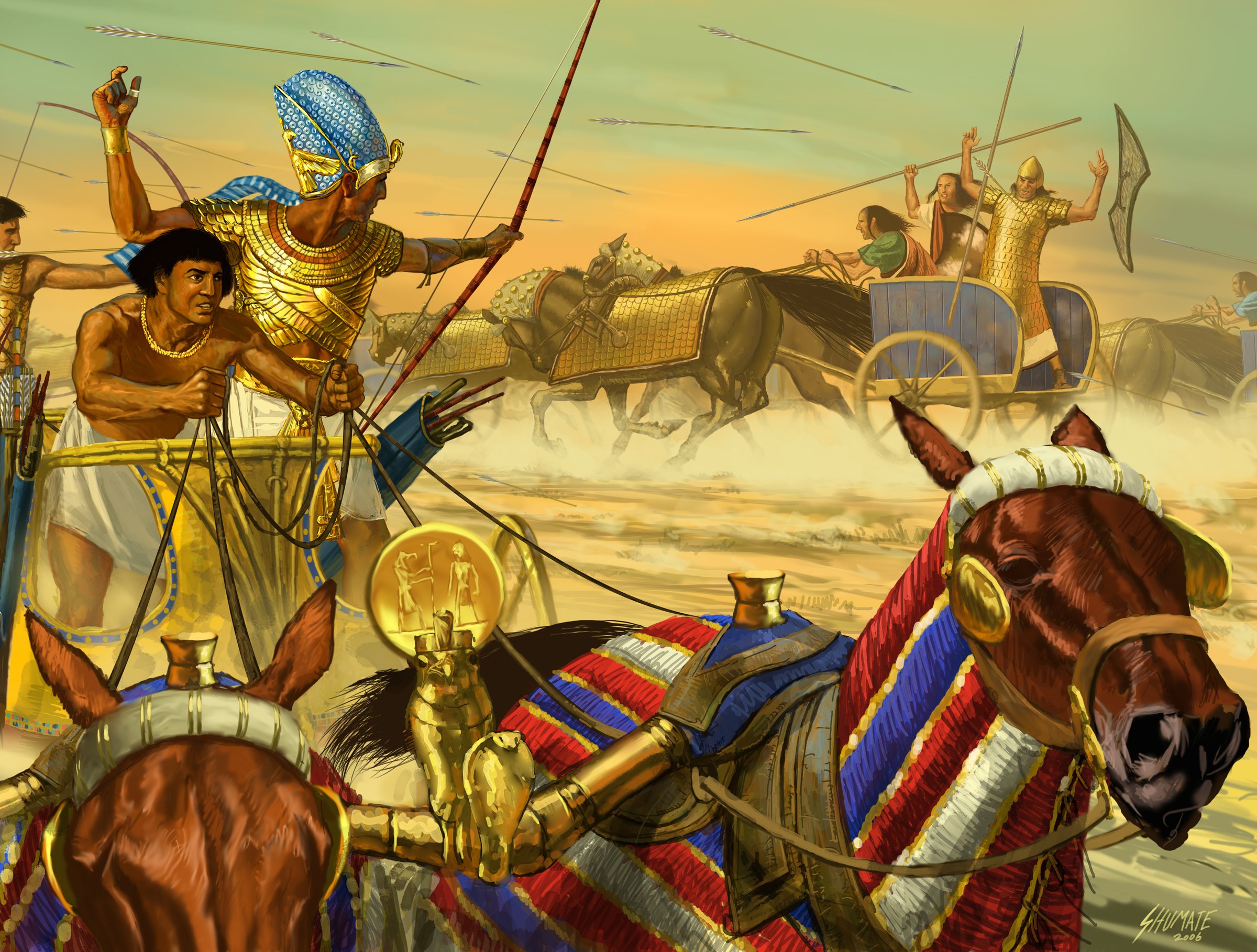
an Imanginary art of the events of the Battle of Kadesh
Introduction
The Battle of Kadesh fought around 1274 BC near the modern-day border of Syria and Lebanon, stands as one of the most famous and well-documented conflicts of the ancient world. It pitted the forces of the Egyptian Empire, led by Pharaoh Ramesses II, against the Hittite Empire, under King Muwatalli II. This battle is significant for its scale and the tactical maneuvers employed and for the resultant diplomatic breakthrough: the earliest known peace treaty in recorded history.
Background of the Battle
The Egyptian and Hittite empires were two dominant powers of the Late Bronze Age, each seeking to expand their influence over the Levant, a region of strategic and economic importance. The city of Kadesh, located on the Orontes River, was a critical point of contention between these empires. Control over Kadesh meant domination of the trade routes and military advantage in the region.
Ramesses II ascended the throne of Egypt with grand ambitions of restoring Egyptian dominance over territories that had been lost or contested during the preceding reigns. On the other hand, the Hittites were intent on maintaining their control over the region and thwarting Egyptian expansion.
The Battle
Ramesses II led a vast army, reportedly numbering 20,000 men, divided into four divisions named after the Egyptian Gods Amun, Ra, Ptah, and Seth. His strategy involved a rapid march to Kadesh, intending to surprise the Hittite forces. However, Muwatalli II had positioned his army, allegedly 40,000 strong, including 3,500 chariots, near Kadesh, aware of the Egyptian approach.
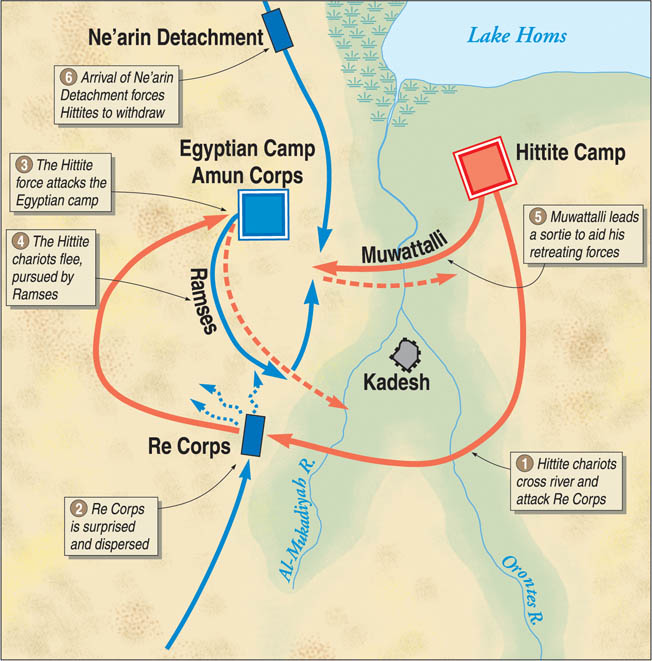
A crucial element in the battle was the intelligence war. Ramesses II was misled by false information provided by Hittite spies, which led him to believe that the Hittite army was far from Kadesh. As a result, the Egyptian divisions advanced in a scattered formation, with the division of Amun reaching the outskirts of Kadesh first.
A map showing the events and places of the battle
Seizing the opportunity, Muwatalli II launched a surprise attack with his chariots on the isolated Amun division. The initial Hittite assault caused significant chaos and panic among the Egyptians. Ramesses II himself was nearly captured, but he managed to rally his troops and stabilize the situation with remarkable personal bravery and leadership.
The Egyptian counterattack, supported by reinforcements from the Ptah division, eventually pushed the Hittites back. Despite the intense fighting, neither side achieved a decisive victory. The Egyptians claimed a tactical success in that they held their ground, while the Hittites maintained control of Kadesh.
The Aftermath
The aftermath of the Battle of Kadesh saw both empires exhausted by the protracted conflict. The high cost of continuous warfare and the desire for stability led to diplomatic overtures from both sides. Sixteen years after the battle, in 1258 BC, Ramesses II and Hattusili III, the new Hittite king, concluded a peace treaty. This treaty is the earliest known surviving peace agreement in history.
The Treaty of Kadesh
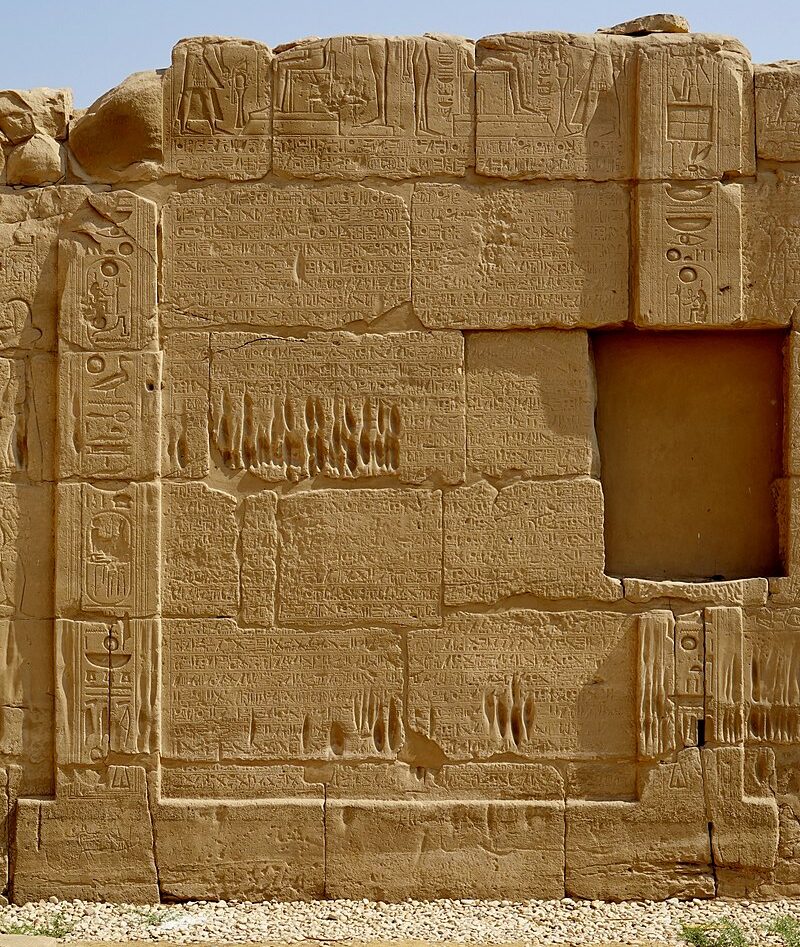
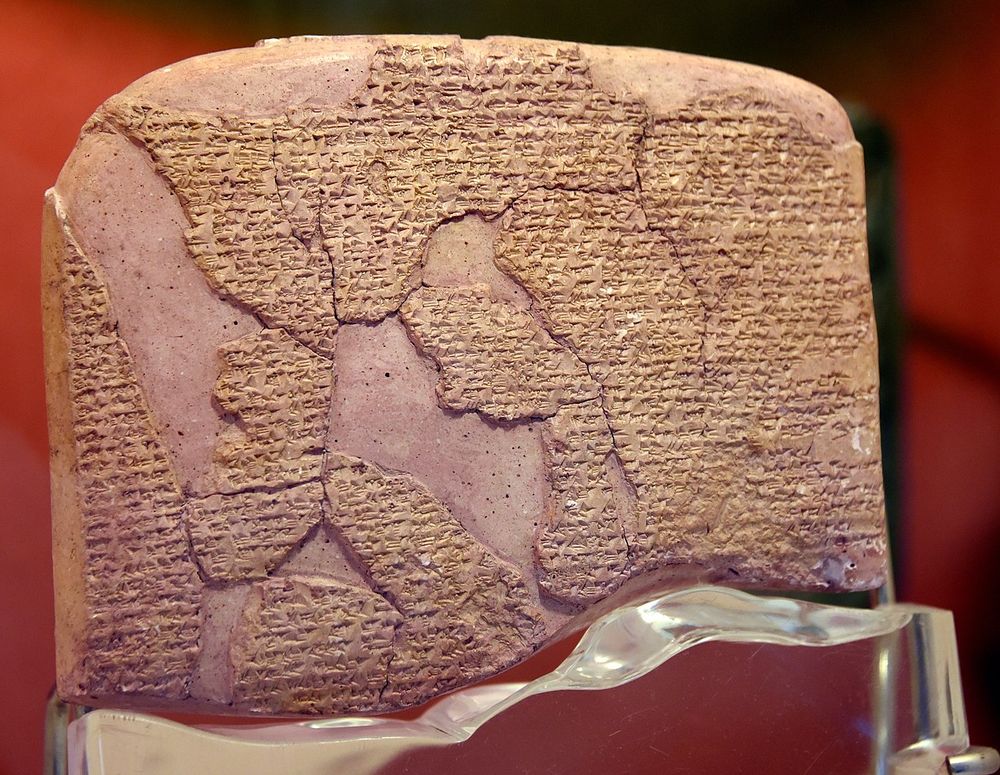
The Treaty of Kadesh is remarkable not only for its content but also for its form and the insight it provides into ancient diplomacy. The treaty, preserved in both Egyptian hieroglyphs and Akkadian cuneiform, reveals a sophisticated understanding of international relations and legal principles.
The main provisions of the treaty included a mutual non-aggression pact and a defensive alliance. Both parties agreed to respect each other’s territorial boundaries and pledged not to engage in hostilities against one another. In case of external aggression, they committed to mutual defense and support.
The treaty also addressed issues of extradition and asylum. It stipulated that political refugees and fugitives fleeing from one empire to the other would be returned to their home country, reflecting a concern for internal stability and the rule of law.
Moreover, the treaty included clauses for the protection of trade routes and the free movement of people and goods, emphasizing the economic dimension of peace. The detailed nature of the treaty and its dual-language inscription signify the importance both empires placed on formalizing their relationship and ensuring the document’s durability and recognition.
The Egyptian version at Karnak Temple
The Hittite version of the treaty at the Istanbul Archaeology Museum
Significance and Legacy
The Battle of Kadesh and the subsequent peace treaty hold significant historical importance. The battle itself is a testament to the scale and complexity of ancient warfare, involving large armies, advanced military tactics, and the crucial role of intelligence and deception.
The Treaty of Kadesh, on the other hand, marks a milestone in the history of diplomacy. It demonstrates an early understanding of the benefits of peace over continuous warfare and the value of negotiated settlements. The treaty’s existence underscores the ability of ancient civilizations to engage in sophisticated diplomatic practices and establish legal frameworks for international relations.
In modern times, the Treaty of Kadesh has been hailed as a precursor to contemporary peace agreements and a symbol of the enduring human quest for peace and stability. Its principles resonate with the ongoing efforts to resolve conflicts through dialogue and negotiation rather than violence.
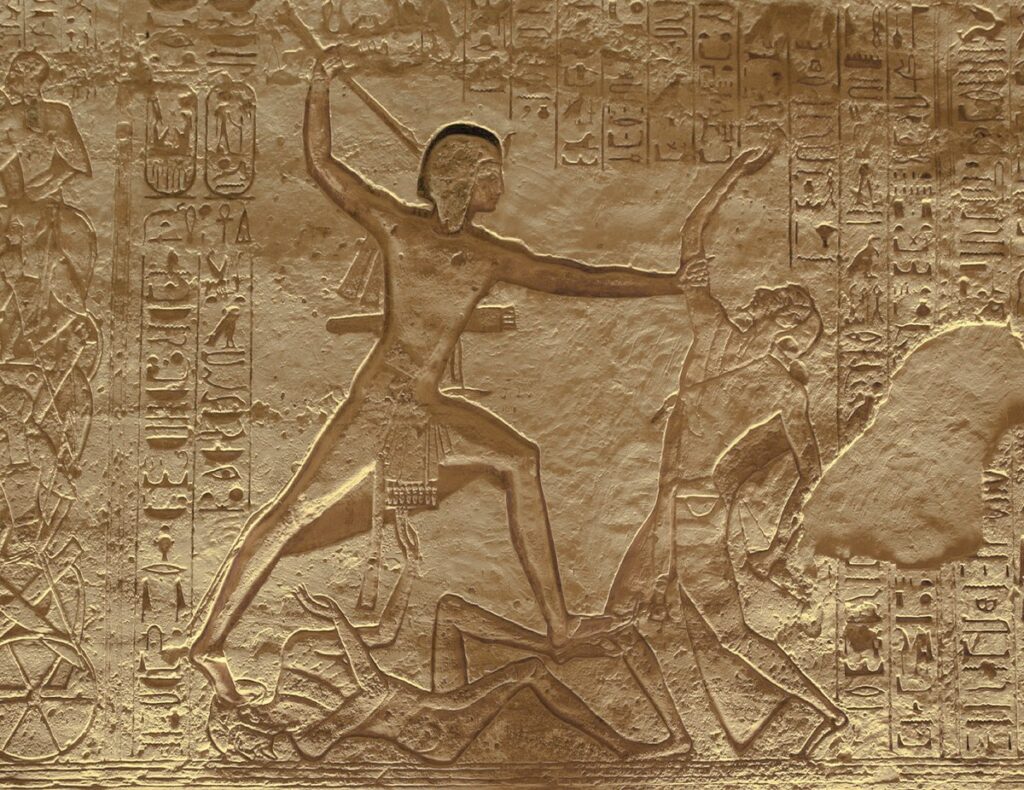
A carving of Ramesses II standing on one enemy while beating another at Abu Simbel Temple
Conclusion
The Battle of Kadesh and the first known peace treaty in history offer valuable lessons on the complexities of human conflict and the potential for diplomacy to overcome even the most entrenched hostilities. These events from over three millennia ago continue to inspire and inform our understanding of international relations and the enduring pursuit of peace.