The Original Location of The Statue of Liberty: Egypt
Date: September 2, 2024
The Statue of Liberty is one of the most iconic monuments in the world, symbolizing freedom and democracy. However, few people know that the statue, originally called “Liberty Enlightening the World,” was initially conceived as a symbol for a different location: Egypt. This essay will explore the idea, history, location, and reasons why the Statue of Liberty was initially intended for Egypt but ultimately ended up in New York Harbor.
The Idea Behind the Statue
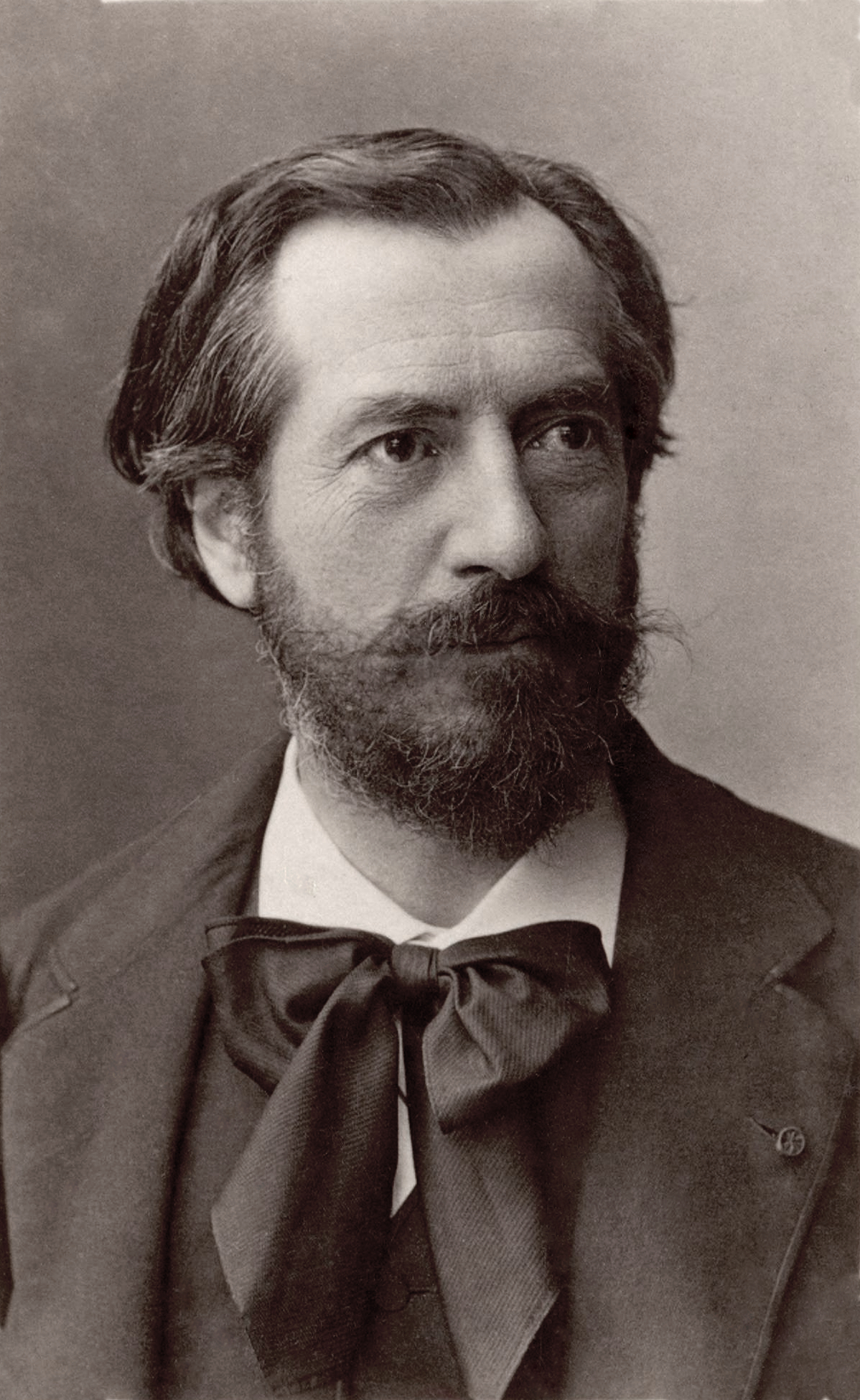
The concept of the Statue of Liberty originated with French sculptor Frédéric Auguste Bartholdi, who was deeply inspired by the ancient civilizations of Egypt and their monumental architecture. In the mid-19th century, Egypt was undergoing significant modernization under the leadership of Khedive Isma’il Pasha, the Ottoman viceroy. Isma’il Pasha was eager to position Egypt as a modern state on the global stage, akin to European powers. Bartholdi envisioned a colossal statue, a “modern colossus,” that would stand at the entrance of the newly constructed Suez Canal—a marvel of engineering that connected the Mediterranean Sea with the Red Sea.
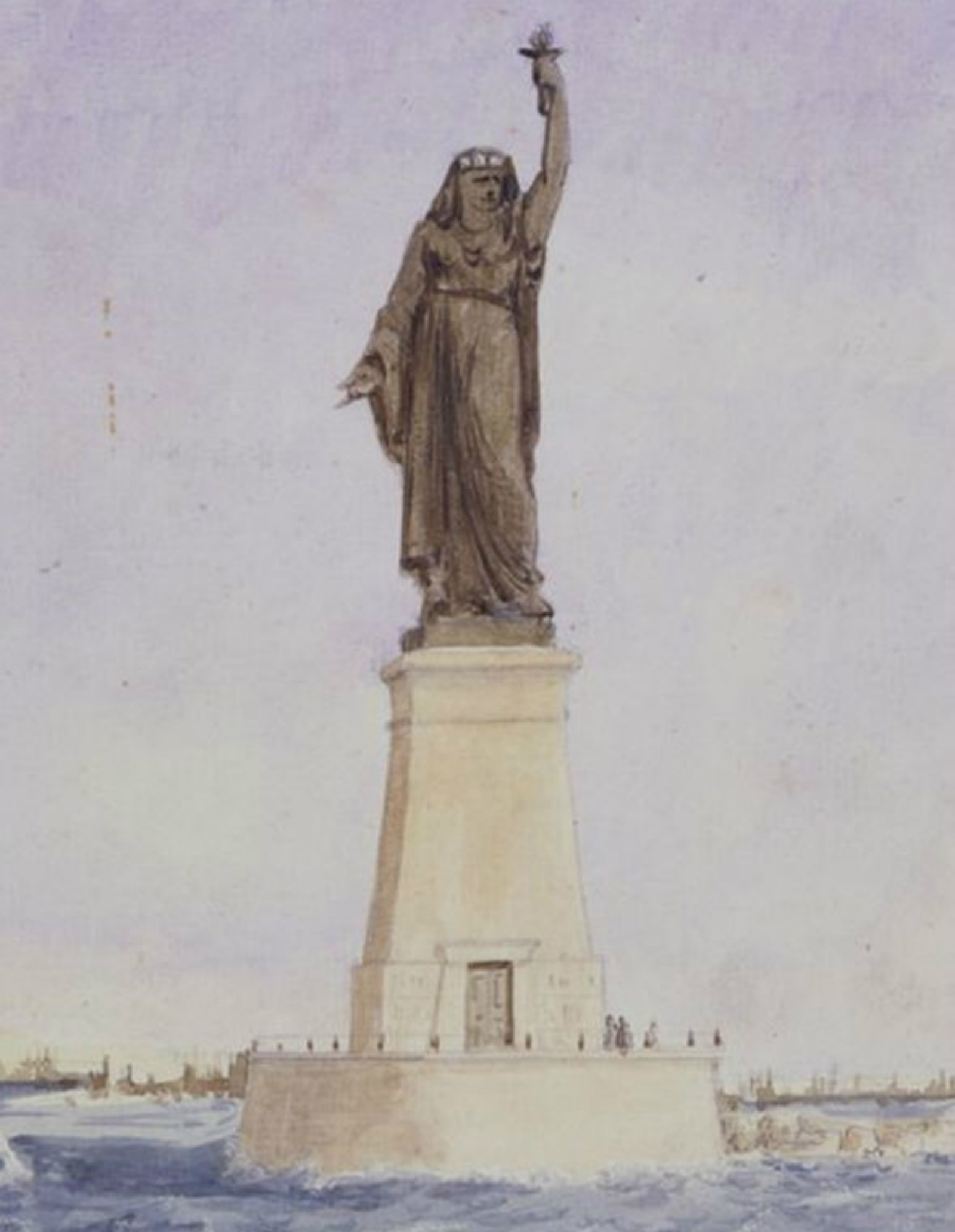
Bartholdi’s idea was to create a statue that symbolized progress and enlightenment. He envisioned a gigantic figure of a woman dressed in traditional Egyptian robes, holding a torch aloft to symbolize the light of progress shining over the East. This statue, which he proposed to name “Egypt Bringing Light to Asia,” would be a symbol of Egypt’s modernization and its pivotal role in bridging Europe and Asia. The statue was to stand at Port Said, at the northern entrance of the Suez Canal, greeting ships as they passed through this vital new maritime route.
Frédéric Auguste Bartholdi
a concept art of how the statue would have looked like
The Idea to The Khedive
In 1869, the Suez Canal was officially opened, a grand event attended by dignitaries from around the world. During this time, Bartholdi traveled to Egypt to present his idea to Isma’il Pasha. The Khedive was initially interested in the project, recognizing that it could serve as a powerful symbol of Egypt’s aspirations and its central role in global trade.
Location and the Symbolism of the Statue
The proposed location for the statue was Port Said, a city on the Mediterranean coast of Egypt, strategically situated at the entrance of the Suez Canal. This location was not only geographically significant but also symbolically powerful. The Suez Canal was one of the most important trade routes in the world, drastically reducing the time it took for ships to travel between Europe and Asia. A statue at this location would have been a potent symbol of Egypt’s role as a gateway between continents and cultures.
Bartholdi’s vision was of a towering figure, much like the ancient colossi of Egypt, that would stand as a beacon of progress and a celebration of Egypt’s rich cultural heritage. The statue’s design drew heavily on the iconography of ancient Egyptian art, with the female figure resembling the goddess Isis, a symbol of motherhood and fertility in Egyptian mythology.
Why It Didn't Happen?
Despite the initial enthusiasm, several factors ultimately led to the abandonment of the project. The most significant reason was financial. Egypt was facing severe economic difficulties, exacerbated by the enormous debts incurred from the construction of the Suez Canal and other modernization efforts. Isma’il Pasha was forced to sell Egypt’s shares in the Suez Canal to the British government in 1875 to alleviate some of the financial pressure. Given these circumstances, funding a massive statue project was simply not feasible.
Furthermore, there was likely a lack of consensus among Egypt’s ruling elite and European financiers about the project’s value. The idea of a colossal statue may have been appealing, but it was not considered a priority in a country struggling with debt and political instability. The geopolitical context also played a role; the growing influence of European powers in Egypt made the project less about celebrating Egypt’s achievements and more about displaying European influence, which may have dampened enthusiasm for the statue.
The Statue's New Home: New York
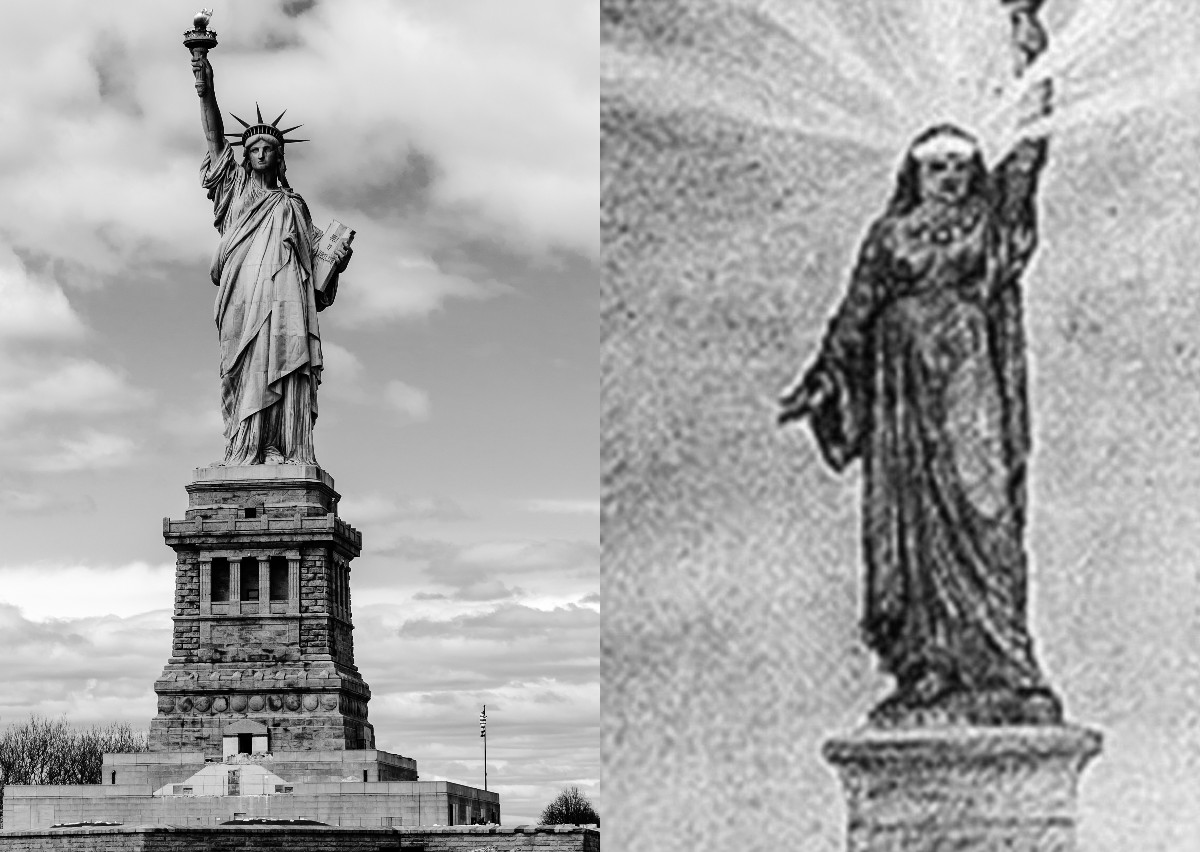
After the project was shelved in Egypt, Bartholdi turned his attention to the United States, which was emerging as a symbol of freedom and democracy in the late 19th century. The idea of a statue symbolizing liberty found a receptive audience in America, especially among those who wanted to celebrate the centennial of the Declaration of Independence in 1876. Bartholdi reworked his design, transforming the Egyptian woman into the familiar figure of Lady Liberty, a robed Roman goddess holding a torch in one hand and a tablet inscribed with the date of the American Declaration of Independence in the other.
The Statue of Liberty in New York
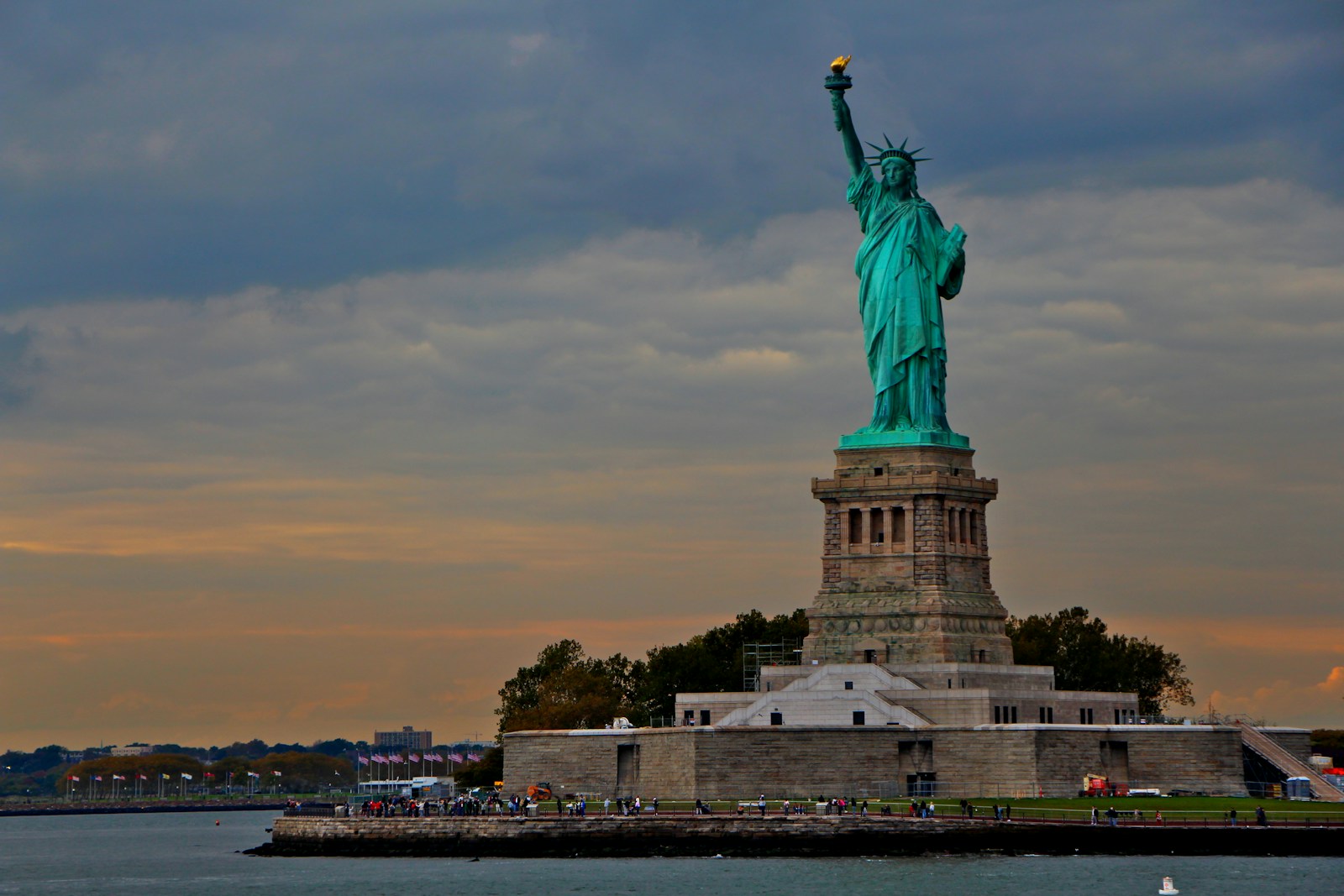
The statue, now known as the Statue of Liberty, was completed in France and then shipped to New York, where it was assembled and officially dedicated in 1886. Standing on Liberty Island, the statue became an enduring symbol of freedom, democracy, and the enduring friendship between France and the United States.
I am surprised to know such information, I will read more.