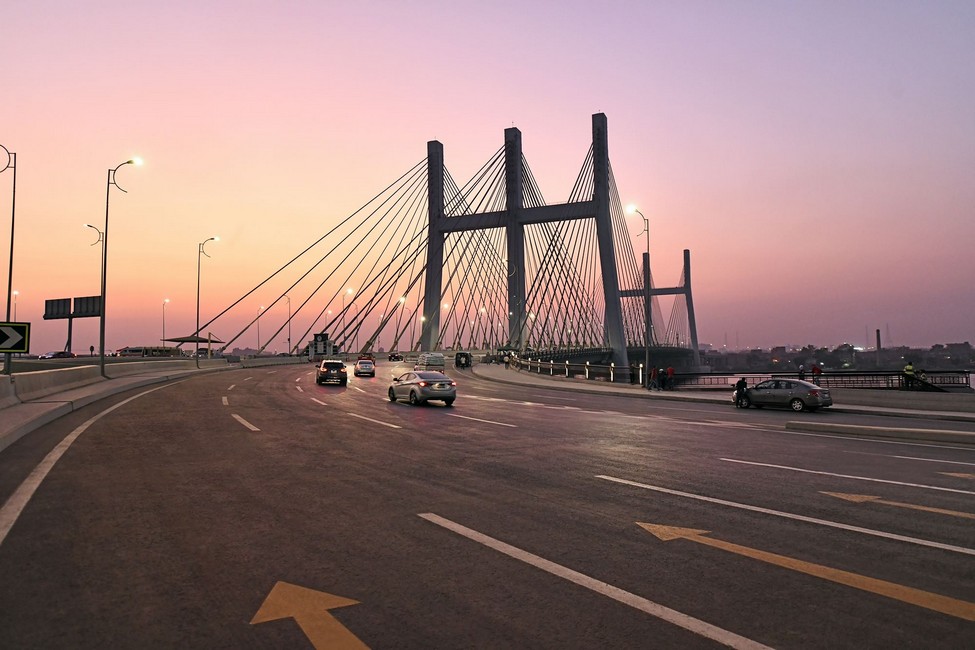
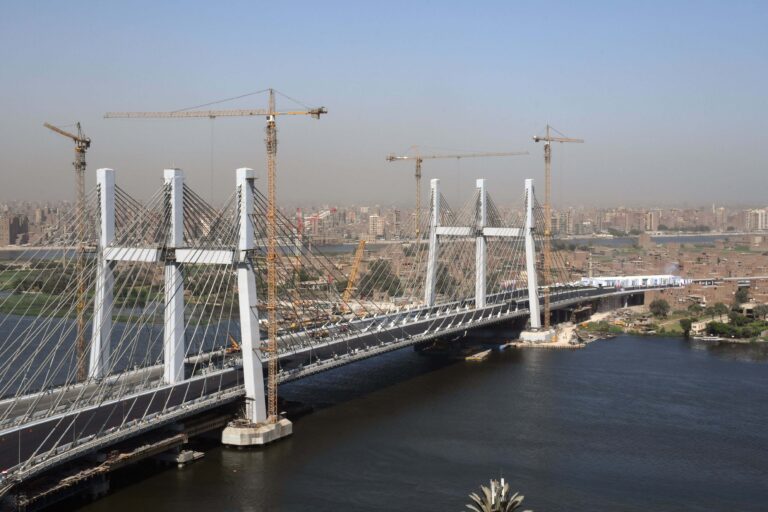
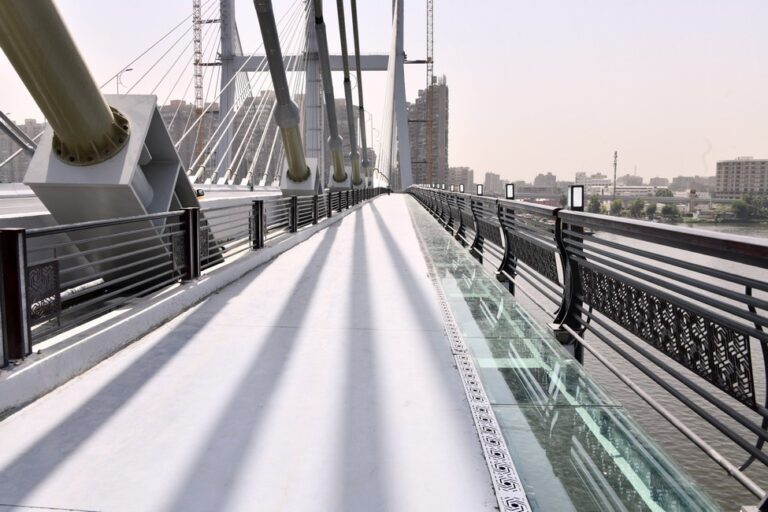
The Tahya Misr Bridge, also known as the “Long Live Egypt” Bridge, stands as a marvel of modern engineering and a symbol of Egypt’s aspirations for progress and connectivity. Spanning the Nile River in Cairo, this cable-stayed bridge has garnered international recognition not only for its impressive dimensions but also for its role in enhancing the infrastructure and economy of Egypt’s bustling capital.
Engineering Feats and Design
Inaugurated in May 2019, the Tahya Misr Bridge was constructed as part of a broader initiative to improve transportation infrastructure in Egypt. It was designed by the Arab Contractors Company in collaboration with international consultants and engineers. The bridge’s total length extends to approximately 5,400 meters, with a main span of 540 meters, making it one of the longest cable-stayed bridges in the world. The bridge deck is 67.3 meters wide, and accommodates six lanes of traffic in each direction, significantly alleviating congestion in one of Cairo’s busiest areas.
One of the standout features of the Tahya Misr Bridge is its two imposing pylons, each standing 92 meters tall. These pylons are the tallest of their kind in Egypt and are equipped with a sophisticated cable system that supports the bridge deck. The cables are arranged in a harp formation, adding both to the structural integrity and the aesthetic appeal of the bridge. The use of high-strength steel and concrete in the construction ensures durability and resilience against the harsh environmental conditions prevalent in the region.
Guinness World Record
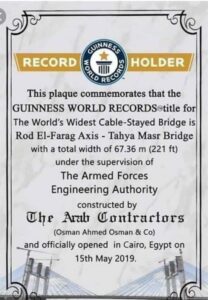
The Tahya Misr Bridge in Cairo holds a Guinness World Record for being the widest cable-stayed bridge in the world. Officially recognized on May 15, 2019, the bridge boasts a remarkable width of 67.3 meters. This impressive feat of engineering not only underscores Egypt’s advancements in infrastructure but also highlights the nation’s ability to undertake and complete large-scale projects with precision and excellence. The record-breaking status of the Tahya Misr Bridge has brought global attention to Egypt, celebrating its achievements in modern construction and engineering.
Economic and Social Impact
The strategic location of the Tahya Misr Bridge plays a crucial role in its significance. It connects the districts of Rod El Farag and Warraq, two vital areas in Cairo, facilitating smoother and faster transportation of goods and people. Before the bridge’s construction, the residents and businesses in these areas faced significant delays and logistical challenges due to the limited number of crossing points over the Nile. The bridge has dramatically reduced travel time, fostering economic activity by enabling easier access to markets, services, and employment opportunities.
Furthermore, the bridge is an essential component of the Cairo Ring Road, which is a major arterial route that encircles the city. This integration has enhanced the overall traffic flow in Cairo, reducing bottlenecks and improving the efficiency of the transportation network. The bridge also supports the movement of heavy vehicles and freight, contributing to the industrial and commercial growth in the region.
Symbolism and National Pride
Beyond its practical benefits, the Tahya Misr Bridge holds significant symbolic value for Egypt. The name “Tahya Misr,” which translates to “Long Live Egypt,” reflects a sense of national pride and optimism. The bridge was inaugurated by President Abdel Fattah el-Sisi, who emphasized its importance as a milestone in Egypt’s development journey. The bridge’s impressive scale and modern design serve as a testament to Egypt’s engineering capabilities and its commitment to modernization.
The construction of the bridge also provided numerous employment opportunities, engaging thousands of workers and engineers. This not only boosted the local economy but also showcased the potential of the Egyptian workforce in handling large-scale infrastructure projects. The successful completion of the bridge within a relatively short period of four years demonstrated effective project management and coordination among various stakeholders.
Environmental Considerations
While the Tahya Misr Bridge stands as a symbol of progress, its construction and operation also take into account environmental considerations. The bridge’s design incorporates measures to minimize its ecological footprint, such as using sustainable materials and implementing waste management practices during construction. Additionally, the improved traffic flow and reduced congestion contribute to lower vehicle emissions, thereby benefiting the air quality in Cairo.
Conclusion
The Tahya Misr Bridge is more than just a crossing over the Nile; it is a manifestation of Egypt’s aspirations for development, connectivity, and modernization. Its impressive engineering, strategic importance, and symbolic value make it a landmark achievement in the nation’s infrastructure landscape. As Cairo continues to grow and evolve, the Tahya Misr Bridge will remain a crucial artery, supporting the city’s dynamic and ever-changing needs.